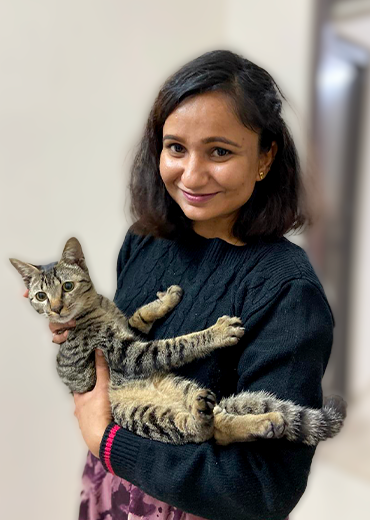
Indoor cat enrichment means arranging your cat’s home and routine so they can hide, climb, scratch, explore, forage, stalk, chase, catch and rest safely. Toys are useful, but a healthy indoor environment also needs secure retreats, separated resources, suitable scratching areas, elevated spaces and positive interaction. Indoor living protects cats from many outdoor hazards, but the home must still offer meaningful choices. A cardboard hideaway, stable perch, well-placed scratcher and a few minutes of responsive play can be more valuable than a pile of toys your cat never uses. Quick answer: Start with one safe hiding place, one stable elevated perch, vertical and horizontal scratching options, food and water away from the litter area, and short interactive play matched to how your cat likes to hunt. Rotate toys rather than leaving everything out continuously.
What enrichment includes
The AAFP and ISFM feline environmental guidelines identify five foundations of a healthy feline environment:
- A safe place
- Multiple, separated key resources
- Opportunities for play and predatory behaviour
- Positive, consistent and predictable human–cat interaction
- An environment that respects the cat’s sense of smell
This means enrichment is broader than exercise. A cat needs opportunities to act as a cat and enough control to approach, withdraw, rest or observe without being forced into interaction.
Build the foundation first
Provide a safe place
Every cat needs somewhere to retreat without being disturbed. This could be a covered bed, carrier left open, box, shelf or quiet area under furniture. Cats benefit from resting areas protected from loud noises, dogs, unfamiliar people, children and tension with other cats. A safe place should be accessible whenever the cat wants it. Do not pull a hiding cat out for play or place toys directly into the retreat. Hiding is not a failed enrichment activity; it is one of the choices an enriched environment should allow.
Separate important resources
Avoid putting all feline resources into one compact station. Food, water, litter trays, scratching areas, play zones and resting places should be distributed so the cat can use one without feeling trapped near another. In a multi-cat home, competition may be subtle. Provide multiple, visually separated places to eat, drink, toilet, scratch, hide and rest so one cat cannot control access. International Cat Care recommends at least one of each important resource per cat plus one extra, spaced around the home rather than grouped together.
Add vertical territory
Vertical space expands a small flat by giving a cat more usable territory. A sturdy cat tree, cleared shelf, secure wall platform or stable window perch can support climbing, resting and observation. High places can also give cats more control in multi-cat homes. Check stability before use. A perch should not rock, collapse or lead to an unsafe jump. Kittens, seniors and cats with impaired mobility may need lower platforms, intermediate steps or ramps rather than one tall leap.
Offer hiding choices
Use open cardboard boxes, covered beds or furniture clearances that let the cat enter and leave easily. If using a paper bag, remove handles first and supervise until you know how the cat interacts with it. Cornell notes that safe enrichment need not be expensive; boxes, suitable paper bags and simple balls can engage cats. Place some hiding spaces low and others above floor level. Preferences vary, and a choice lets the cat decide whether it wants concealment, height or both.
Match play to hunting style
Cats differ in what attracts them. One may watch a feather move through the air; another may prefer a toy that skitters along the floor or disappears behind furniture. Observe whether your cat responds to bird-like movement, ground prey, insects, sound, texture or food. Use a wand toy to create short, unpredictable movements away from the cat. Pause, hide the toy and let the cat stalk before moving it again. Feline environmental guidelines recommend mimicking aerial or ground prey and allowing the cat to catch the toy.
A simple play sequence
- Let the cat notice the toy without pushing it into the cat’s face.
- Move it away in brief, irregular bursts.
- Pause behind an object so the cat can stalk.
- Allow a chase, pounce and physical catch.
- End while the cat is still comfortable; a small portion of the normal meal can follow.
Short sessions are usually easier to fit into the day and may suit feline hunting patterns better than one forced marathon. Stop if the cat walks away, hides, flattens its ears, lashes its tail or appears distressed. Play should be an invitation, not an obligation. Never use hands or feet as prey. The AAFP/ISFM guidelines advise against this because it can lead to injury for both the cat and person.
Choose toys by function
| Enrichment need | Useful options | How to use | Supervision |
|---|---|---|---|
| Stalk and chase | Teaser or wand toy | Move like prey, pause and allow a catch | Direct supervision; store after use |
| Pounce and kick | Appropriately sized kicker or durable plush toy | Let the cat grip, bite and rake | Inspect seams and attachments |
| Bat and track | Large lightweight ball or enclosed track toy | Place on a clear, non-slip floor | Observe first; remove if damaged |
| Solve and forage | Beginner puzzle feeder or treat-dispensing toy | Use part of the measured meal and start easy | Observe introduction; clean after food use |
| Scratch and stretch | Stable vertical post and horizontal pad | Put beside an existing scratch target or rest area | Check stability and wear |
| Climb and observe | Cat tree, secure shelf or window perch | Provide safe access and an exit route | Check anchoring and fall risk |
| Scent exploration | Catnip toy for responsive cats; familiar fabric | Offer briefly and observe the response | Remove if the cat becomes distressed or rough |
Zigly’s Cat Toys collection currently covers interactive, plush, catnip, puzzle and scratching toys, while dedicated collections exist for cat teasers and wands and for cat trees and scratchers.
Rotate instead of overfilling
Leaving every toy on the floor can make each one predictable. Keep a small, varied selection available and exchange items periodically. Both International Cat Care and Ohio State recommend toy rotation to preserve novelty. Rotation does not require a rigid weekly schedule. Replace items when engagement falls, while leaving a favourite comfort object available if the cat uses it consistently. Change one variable at a time so a cautious cat is not overwhelmed by a completely rearranged home.
Turn meals into enrichment
Food enrichment lets cats search, manipulate and work for a portion of their daily food. Veterinary guidance supports puzzle feeders, scattered kibble, hidden food and multiple small feeding opportunities as ways to encourage natural feeding behaviour and increase activity.
Start with an easy puzzle
- Reserve part of the cat’s normal measured meal.
- Introduce a simple open puzzle where food is easy to reach.
- Let the cat investigate without forcing its paws or face into it.
- Increase difficulty only after the cat succeeds comfortably.
- Wash food-contact surfaces and remove leftovers.
Do not add an unrestricted volume of treats to the cat’s normal ration. When several cats share a home, feed separately if needed so a confident cat does not take another cat’s portion. Cats with prescribed diets, food allergies, dental pain or mobility limitations may require veterinary guidance before changing feeding methods. Wet food can be used in products designed for wet feeding, provided they can be cleaned thoroughly. Dry food may work in rolling, stationary or homemade puzzles. Any DIY feeder must be smooth, stable and free from tape, staples, sharp edges or detachable pieces.
Provide the right scratcher
Scratching is normal feline behaviour used for claw care, stretching and communication. A single hidden post may fail because it has the wrong orientation, material, height or location for that cat. Offer a stable vertical surface tall enough for a full stretch and a horizontal option such as corrugated cardboard. Place scratchers near sleeping areas, entrances, shared living spaces or furniture the cat already targets. International Cat Care recommends offering different orientations and materials so owners can identify the cat’s preference. Do not punish scratching. Block or protect the furniture temporarily, position an attractive scratcher beside it and reward voluntary use. Catnip may encourage some cats to investigate a new scratching surface, but not all cats respond to it.
Use scent carefully
Scent is part of a cat’s environment, and unfamiliar odours can be more intrusive than enriching. Avoid applying strongly scented products to every bed, toy and resource. Preserve familiar bedding scents and let the cat investigate new objects at its own pace. Catnip can provide short-term scent enrichment for responsive cats. Introduce a small amount or one catnip toy and observe. Remove it if the response becomes agitated, fearful or conflict-prone. Catnip is optional; a cat that ignores it does not need to be persuaded.
Create safe window enrichment
A stable perch behind a closed, secure window can offer changing sights and sounds. However, an ordinary insect screen should not be assumed to contain a cat. International Cat Care recommends window limiters or secure mesh/barriers and stresses that balconies must be fully cat-proofed. If outdoor animals at the window trigger staring, urine marking, pacing or aggression toward another household pet, the view may be a stressor rather than enrichment. Add privacy film, close the blind temporarily or reposition the perch while discussing persistent behaviour with a veterinarian or qualified feline behaviour professional.
Enrichment in small homes
A small apartment can still support an indoor cat when resources use height and remain well separated. Try:
- A stable window perch or cleared shelf
- A tall narrow scratching post plus a flat cardboard pad
- A box under a side table as a retreat
- A puzzle feeder used for part of one meal
- A wand stored in a closed cupboard between sessions
- Several water and resting points in different areas
Vertical arrangement should not compromise safety. Secure free-standing furniture and wall-mounted items, maintain safe landing areas and offer easier routes for kittens, seniors and cats with pain or poor balance.
Multi-cat enrichment
More cats do not necessarily enrich one another. Social tension can be subtle, and one cat may block another from a corridor, litter tray, food bowl, perch or owner. Current feline guidance recommends distributing safe places, food, water, litter boxes, scratching surfaces and play opportunities across each cat’s territory. Play with cats separately when one monopolises the toy or another watches from a distance. Create more than one route to important resources and avoid high perches with only one entrance or exit. Never force cats to share a bed, food puzzle or small cat tree.
Adapt by life stage
Kittens
Use short, supervised play and toys too large to swallow. Kitten-proof electrical cords, ribbons, hair ties, thread and small detachable parts. Introduce gentle puzzle feeding and scratching early, but keep tasks easy and safe.
Adult cats
Combine active play, climbing, scratching, foraging and quiet observation. Monitor body condition and include all food used in puzzles or training within the daily allowance.
Senior and mobility-limited cats
Enrichment should remain accessible. Use low platforms, ramps, non-slip surfaces, shallow puzzle feeders and toys that move within comfortable reach. A sudden decline in jumping, play, grooming or appetite deserves veterinary assessment rather than being attributed automatically to age.
Cat-toy safety checklist
Inspect toys before the first use and regularly thereafter. Cornell recommends avoiding small pieces and linear materials such as loose feathers or strings that may detach and be swallowed.
- Supervise wand, string, ribbon and feather play.
- Store interactive wands after the session.
- Remove frayed string, open seams, cracked plastic, exposed wire and loose bells or eyes.
- Choose toys that cannot be swallowed whole.
- Keep yarn, sewing thread, hair ties, rubber bands and electrical cords inaccessible.
- Ensure battery compartments remain securely closed.
- Wash food puzzles according to their instructions.
- Remove a toy if the cat chews off or ingests pieces.
- Never shine a laser into the eyes; finish laser play by switching to a physical toy the cat can catch.
If string is protruding from a cat’s mouth or anus, do not pull it. Seek urgent veterinary care because a swallowed linear object can damage the gastrointestinal tract.
A practical daily routine
Use this as a flexible starting pattern rather than a rule:
| Time | Enrichment idea |
|---|---|
| Morning | Short wand-play sequence followed by part of breakfast |
| Daytime | Safe perch, hiding choices and one inspected solo toy |
| Meal period | Easy puzzle feeder or food hidden in safe, accessible locations |
| Evening | Interactive chase-and-catch play or positive-reinforcement training |
| Ongoing | Accessible scratchers, separated water and litter resources, quiet rest |
| Rotation day | Swap selected toys, inspect wear and introduce one modest novelty |
A cat may prefer several brief interactions or one focused session. Follow engagement rather than pursuing an arbitrary play target. Predictability matters, but the activity itself can remain varied.[11][2]
Is my indoor cat bored?
Possible signs that the environment needs review include persistent attention-seeking, destructive scratching, overeating, pacing, reduced engagement, overgrooming, rough play and repeated attempts to escape. These are not proof of boredom and can overlap with medical disease, pain, anxiety or conflict. Arrange veterinary assessment when a behaviour is new, severe or persistent, particularly with appetite or weight change, vomiting, diarrhoea, hair loss, wounds, urination outside the litter tray, altered mobility, hiding or aggression. Treating a medical problem as boredom may delay necessary care.
Frequently asked questions
How do I keep an indoor cat entertained?
Provide choices across several needs: hunting-style play, food puzzles, scratching, climbing, hiding, observation and predictable social interaction. Rotate toys and let the cat decide when to engage.
What are the best toys for an indoor cat?
The best mix usually includes one supervised interactive toy, a safe object the cat can catch or kick, a puzzle feeder and appropriate scratching surfaces. Match movement and texture to the cat’s preferences rather than buying only one toy type.
How often should I play with my cat?
Offer brief opportunities regularly and adjust to age, health and interest. Some cats prefer several short hunting-style sessions. Stop when the cat disengages, and never force interaction.
Can indoor cats get bored?
Yes, an indoor environment can become under-stimulating when it lacks choices for play, exploration, climbing, scratching and foraging. However, behaviour changes can also indicate illness or stress and should not automatically be labelled boredom.
Are laser pointers safe for cats?
Never direct a laser at a cat’s eyes. Because a light cannot be physically captured, switch to a wand or other tangible toy at the end so the cat can complete the catch.
Can I leave wand toys out all day?
No. Strings, ribbons and detachable feathers can be swallowed or cause entanglement. Use wand toys under supervision and store them securely after play.
How can I enrich my cat without buying toys?
Offer clean cardboard boxes, handle-free paper bags, safe hiding food from the measured ration, rearranged box tunnels and access to a secure perch. Inspect all DIY items for staples, tape, sharp edges, strings and swallowable pieces.
Do two cats keep each other entertained?
Not automatically. Compatible cats may play together, but each cat still needs separate access to food, water, litter, scratching, resting and hiding resources. Watch for blocking, staring, chasing and resource avoidance.
Do all cats respond to catnip?
No. Catnip response varies, so lack of interest is normal. For responsive cats, offer a small amount or catnip toy and discontinue it if the cat becomes distressed or overly aroused.
When should I ask a veterinarian?
Seek advice for sudden or persistent behaviour change, altered appetite or weight, overgrooming, aggression, toileting changes, reduced jumping, pain signs or ingestion of string or toy pieces.